Zhishang Bio Technology|Supplier of pharmaceutical intermediates, pesticide intermediates and cosmetics raw materials

Basic Analysis of Thiophene | Properties, Structure, and Applications

Some molecules are unknown, but they play an essential role in the vast world of chemistry. Thiophene is a name that may seem unfamiliar, but it’s actually a vital component of modern technology. 

The unique properties of Thiophene quietly change our lives. From electronics to pharmaceuticals, energy to materials. This blog will reveal the structure and applications of thiophene.

-- What is Thiophene? --

Thiophene is a heterocyclic sulfur compound with the chemical formula C4H4S. It occurs in small quantities in crude benzene made from coal tar. It is a clear liquid with an aromatic smell similar to benzene.

The boiling point of Thiophene is 84°C and it’s insoluble in water. It is miscible in ethanol, with ether, acetone and other substances. Flammable. Heat resistant, it does not decompose at 850 degrees. It does not decompose or polymerize under strong acid conditions. Has moderate toxicity.噻吩 结构式
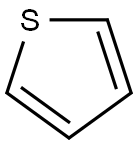
It is similar to a benzene-ring structure, except that one carbon atom has been replaced with a sulfur atom. This gives it unique electronic properties, and reactivity.

Scientists discovered thiophene in the late nineteenth century. It was originally isolated from coal-tar. But now, it is a key molecule for organic synthesis and in industrial chemistry.

The molecular structure of this compound gives it a high degree of aromaticity and conjugation, which allows it to easily participate in chemical reactions.

Thiophene, in reality, is more than a concept. It’s widely used in materials science, medicine, and pesticides. Thiophene-based compounds can also be used in agriculture as effective insecticides that protect crops against pests and disease.

-- What is the Structure of Thiophene? --

The chemical formula for Thiophene, a five-membered heterocyclic with sulfur content, is C4H4S. Its unique molecular structure holds a significant position in the field of chemistry.

The sulfur atom of the Thiophene rings provides an electron pair that is lone enough to form a six-electron aromatic system. Thiophene’s unique electronic structure confers significant aromaticity and stability.

Thiophene is more polarizable and has a greater range of chemical reactions than similar heterocyclic compounds. Thiophene has a colorless and odorless liquid, with a boiling temperature of 84°C. Its relative density is 1.05g/cm3. This makes it easier to purify and handle in industrial production.


Under certain conditions, Thiophene is capable of both nucleophilic and electrophilic substitute reactions, which greatly expands its range of applications.

Thiophene is more aromatic than benzene but has a higher reactivity. This seemingly paradoxical property has been used as a valuable organic synthesis intermediate.

Thiophene, and its derivatives, have become essential raw materials in the modern chemical industry. Statistics show that the global market for Thiophene-related chemicals is worth more than 5 billion US Dollars annually. It continues to grow by a rate of 6-8 percent per year.

Understanding the fundamental properties of Thiophene is important for chemical producers. It allows them to optimize their production processes, create high-performance derivatives and gain a technological advantage in the market.

-- Synthesis and Preparation of Thiophene --

The most common methods of synthesising Thiophene are extractions from coal or petroleum derivatives. However, modern technology is moving towards environmentally-friendly approaches.

These methods, for example, can produce Thiophene with high purity while reducing the by-products. The main challenges in the production process are high energy consumption and sulfur pollution.

Statistics show that the annual global production of Thiophene is thousands of tons. However, traditional methods can lead to increased carbon emissions. This contradicts current global efforts to achieve sustainable development.

In order to address these issues the industry is actively working on green synthesis techniques, such as biocatalysis. This technology uses microorganisms and enzymes to convert renewable sources into Thiophene. The industry is actively developing green synthesis technologies, such as biocatalysis, which uses microorganisms or enzymes to convert renewable resources into Thiophene.

Thiophene is found in coal tar, shale oils and waste acid from crude benzene washes. It can be hydrolyzed at a temperature between 110 and 150 degrees Celsius. Gas generated by hydrolysis is pumped into the condenser through the hydrolysis tower. The condensed distillation products contain about 15%-25% Thiophene as well as about 50%-60% xylene.

For every ton of acid waste, approximately 10kg can be extracted as distillation products. Thiophene with a 90%-95% content can be obtained after dehydration using solid sodium hydroxide, and refinement by distillation.

Butane and sulfur can be used as raw materials to synthesize Thiophene. Thiophene is formed by dehydrogenating butane and then cycling it with sulfur. In laboratory preparations, it can be obtained by reacting 1,4 dicarbonyl compounds to phosphorus trisulfide.

-- Why Thiophene is more Aromatic? --

In order to understand why Thiophene is aromatic, we must examine its electronic structure on the quantum chemistry level.


Thiophene is superior to benzene in terms of the delocalization of electrons. According to the molecular theory of orbitals, the sulfur in the Thiophene rings contributes two additional electrons for the conjugated system. The key is the overlap between the orbitals of the carbon and sulfur atoms. This “orbital mismatch”, despite the difference in size of orbitals, actually creates an unique electron distribution.

The electron cloud distribution of Thiophene ring undergoes subtle modifications, increasing the ring’s stability. This is due to the fact that sulfur atoms have a higher electronegativity than carbon atoms.


A second key piece of evidence is the X-ray data. The average C-C length for Thiophene molecule is 1,37 A, and the C–S length is 1,71 A. These values of bond length show a trend towards averaging which is characteristic of aromatic compounds.

Thiophene is a five-membered heterocycle that exhibits pronounced aromaticity. The lone pair of electrons on the nitrogen atom of the pyrrole rings participates in conjugation resulting in high electron density within the ring. On the other hand, the electronegativity and electronegativity strength of the oxygen in the furan ring results in an uneven distribution of electron clouds.


Only Thiophene is able to balance the electron supply and electronegativity perfectly, resulting in the aromatic system that is closest to its ideal state. Thiophene’s unique electronic structure allows it to retain the stability of its aromatic rings and show moderate reactivity during chemical reactions. This makes it an important building block for organic synthesis.


Understanding the aromatic properties of Thiophene from a materials science perspective is very important. This strong aromaticity is what ensures stability in conductive polymers.

Modern quantum chemistry calculations show that the aromatic stabilization energies of the Thiophene rings contribute about 40% to the total stability in poly Thiophene. This fully demonstrates aromaticity as the key element of functional materials.

-- What are the uses of Thiophene? --

Thiophene’s wide variety of applications and impact may be beyond the imagination of most people. This five-membered heterocyclic is changing the world and our everyday lives.

Thiophene has become a “darling” in the pharmaceutical industry. Over 30% of the small molecules drugs currently on the market are Thiophene-based or derivatives.

The thiophene ring is a multi-functional molecule in these drugs. It not only acts as an important pharmacophore for binding to biological targets but it also regulates the lipid/water partition coefficient through its aromatic properties. This optimizes the absorption and dispersion characteristics of the drugs.

It is also exciting to note that Thiophene compounds are a unique advantage in the development and production of anti-cancer agents. For example, in the most recent CDK4/6 Inhibitors, Thiophene rings improve selectivity, efficacy, and efficiency by forming interactions p-p stacking with the kinase’s active site.

Thiophene has made a revolutionary contribution to electronic materials. The “gold standard” of organic semiconductor materials is Poly (3-Hexylthiophene), with hole mobility up to 0.1cm2/V*s. This allows flexible electronic devices from conception to reality.

Thiophene-based materials are essential to the most advanced OLED displays. They not only produce pure color, but they also control the emission wavelength by molecular design. This allows for display effects that exceed 100% NTSC gamut.

The donor material, based on Thiophene, achieves a conversion efficiency of 18% in organic photovoltaics, which is comparable to the traditional silicon-based solar cell. These materials’ excellent performance is due in large part to their carrier transport ability and environmental stability, which are ensured by Thiophene rings.

Thiophene’s applications in the fine chemicals industry are also varied and exciting. Thiophene derivatives are the main structure in high-performance dyes. They can produce bright colors with excellent light resistance. This is especially true for automotive coatings. Organic pigments that contain Thiophene maintain their color vibrancy for over ten years.

The unique aroma properties of Thiophene are key in the perfume industry. In liquid crystal materials, Thiophene units are used to control the orderliness and arrangement of liquid crystal molecules. This is important for millisecond response times.

Zhishang Bio
Zhishang Bio
Zhishang Bio
Zhishang Bio

Manufacturer of Thiophene

Zhishang Bio is a key partner in the global supply of surfactants, daily-use chemicals and other products. They focus on supplying high-purity and quality Thiophene.

We provide stable, cost-effective, and efficient one-stop purchasing solutions to global customers. We understand how important a reliable supply is to your business. Therefore, we strive to be the best in all aspects.

We have a close relationship with the leading manufacturers in order to guarantee that our products are of high quality and meet industry standards. We are able, through our large-scale purchasing and efficient supply management, to offer customers highly competitive market prices. We also offer flexible quotes based upon the volume of the purchase to help them optimize their production costs.

Our services are characterized by a highly developed logistics system. We achieve visual tracking through multiple warehouse layouts and digital logistic management systems both at home and abroad. This allows us to support multimodal intermodal transport such as rail, road, and sea.

Our service system is designed around the needs of our customers. Our team of professionals responds quickly 7×24 hours per day. We offer personalized services such as product packaging and customized packaging according to customer needs. We focus on creating stable, long-term strategic partnerships with our clients in order to achieve mutual growth.

The logistics system is one of the core advantages of our services. Through multiple warehousing layouts and digital logistics management systems at home and abroad, we achieve visual tracking of the entire transportation process, supporting multimodal intermodal transportation such as sea, rail, and road, strictly ensuring delivery timeliness, and even safe and compliant professional distribution for dangerous goods transportation.

We are committed to building a customer-centric service system. Our professional team provides 7 × 24-hour rapid response, which not only provides precise technical support and after-sales guarantee, but also offers personalized services such as product packaging and customized packaging according to customer needs. We focus on establishing long-term and stable strategic partnerships with our clients, achieving mutual growth through continuous value creation

By choosing us, you are not only selecting a supplier; you are also choosing a partner that is dedicated to your success. We will be happy to offer you free samples and detailed technical support.

Zhishang Bio
Zhishang Bio
Zhishang Bio

Shandong Zhishang Bio Co., Ltd

Zhishang Bio, a subsidiary of Zhishang Chemical Co., Ltd., was established in 2016 and is a new type of chemical enterprise that integrates research and development, production, and sales. Zhishang Bio always adheres to the concept of “integrity management, strict quality control, customer first”.

Through continuous efforts, significant breakthroughs have been made in industries such as pharmaceutical intermediates, pesticide intermediates, food additives, and cosmetic raw materials. The domestic trade team sells well throughout the country, while the foreign trade team is exported to more than 30 countries and regions including the United States, Russia, Spain, Brazil, and enjoys a global reputation.

Invited to participate in this exhibition, Zhishang Bio will comprehensively showcase the company’s strength and achievements in the research and development, production, and quality control of pharmaceutical and pesticide intermediates! At that time, our company will set up an CPHI exhibition at booth E12D29 at the venue, and we will take you to further understand our company’s advantageous products in detail!

You may also want to read
Scroll to Top

Contact us to Get COA

Contact us to Get MSDS